SusanaQuintás
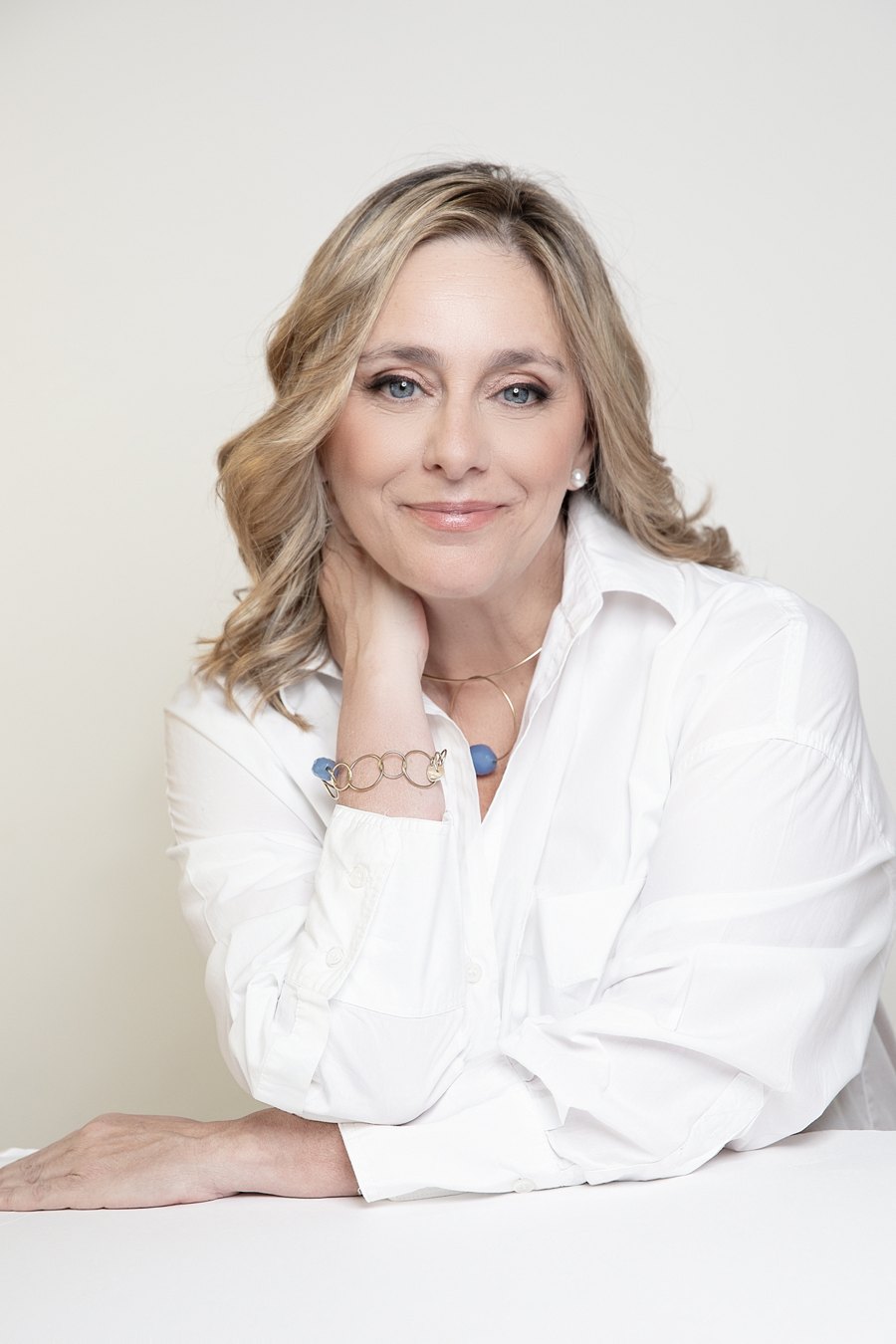
Adviser to business families on governance, ownership transitions, next-generation development and post-liquidity reinvention.
“Governance is what allows a family business to outlive the person who built it.”
Three boards, two regulators,
three working languages
Susana Quintás is an Independent Non Executive Director at three regulated financial institutions in Spain, each owned by a foreign parent, and each conducting board business in a language other than her own.
Sofinco España
- Chair, Nomination and Remuneration Committee
- Member, Audit and Risk Committee
- Board language: English
Reale Seguros Generales
- Chair, Nomination Committee
- Strategy, risk and executive succession
- Board languages: Italian and Spanish
Reale Vida
- Independent Non Executive Director
- Strategy, financial performance and governance
- Board languages: Italian and Spanish
She is a registered auditor and holds fit and proper approval from both the Bank of Spain and the DGSFP, Spain's insurance supervisor, and is listed in the Bank of Spain's Senior Officers Register. Very few directors in Spain hold clearance from both regulators. She previously chaired the Organismo di Vigilanza at Reale Immobili, the independent body responsible for overseeing compliance under Italian law.
Founding Partner
Family Business Academy works with owners, family enterprises, next-generation members and boards on governance, ownership, succession and board effectiveness.
The work is practical. It is about helping a company move from founder-led decision-making toward structured governance without losing the speed and the identity that built it in the first place. The firm also prepares senior executives and family members for the responsibilities that come with a board seat.
When the shareholders
want different things
Much of her board career has been spent in companies where a Spanish operator, an international industrial partner and a foreign investment fund all held shares and did not want the same outcome. Aliseda, one of Spain's largest real estate servicing platforms, with the American investment firm Värde Partners as shareholder. Universalpay, with the US payments group EVO Payments. Euro Automatic Cash, with France's Crédit Mutuel. Sistema 4B, Spain's interbank payments network, where the shareholder table was a room full of competing banks.
Before that she spent more than fifteen years leading investor relations at a listed bank, presenting quarterly results and defending strategy to analysts, institutional investors and rating agencies in London, Paris, Frankfurt, New York and Boston. She has spent much of her professional life explaining a Spanish business to capital that was not Spanish.
That experience is what she brings to families weighing outside investment: the negotiation that determines the next ten years is not the one about valuation. It is the one about board composition, reserved matters, information rights and exit.
Corporate transactions
and transformation
Her board work rests on close to thirty years as an operator, much of it spent on corporate transactions: buying, carving out, selling and standing up businesses across banking, real estate, payments and technology. She led the corporate sale of Banco Pastor, a listed bank, in 2011, after sixteen years on its management committee as Managing Director for Planning and Control and more than fifteen years running its investor relations. At Banco Santander she headed Project Quasar, the transfer of 30 billion euros of non-performing loans and real estate assets and the largest portfolio transaction in Europe in 2017. As Managing Director at Banco Popular she led the carve-out that created Aliseda from inside the bank, coordinated a series of business disposals and the launch of new companies, and started the bank's first artificial intelligence project in 2016. She later built the Spanish market entry for a British proptech scale-up.
Six positions
Governance is not a compliance exercise. It is a decision-making system.
Most family companies do not fail for lack of rules. They fail because nobody designed how decisions actually get made, who gets to say no, and what happens when the founder is no longer in the room.
When outside capital arrives, governance is the real negotiation.
Families focus on price. The terms that decide whether the following decade works are the ones about board seats, reserved matters, information rights and exit.
Succession is the smallest part of the family business question.
Ownership, liquidity, the boundary between family and management, the education of the next generation and the willingness of the current one to step back all matter more, and all get discussed later than they should.
Artificial intelligence is already inside the company. Its governance is not.
Boards are approving deployments they cannot supervise. The question is not whether the technology works. It is who is accountable when it does something the board never authorized.
Sustainability that does not pay for itself will not survive the next downturn.
If an office is not profitable, it cannot be sustainable. She has made this argument publicly since her work on the Sustainable Office Playbook, and it applies well beyond real estate.
A board earns its keep through the quality of its questions.
Not by managing the business. Through the agenda it sets, the information it insists on receiving, and its willingness to be uncomfortable in the room.
Five books
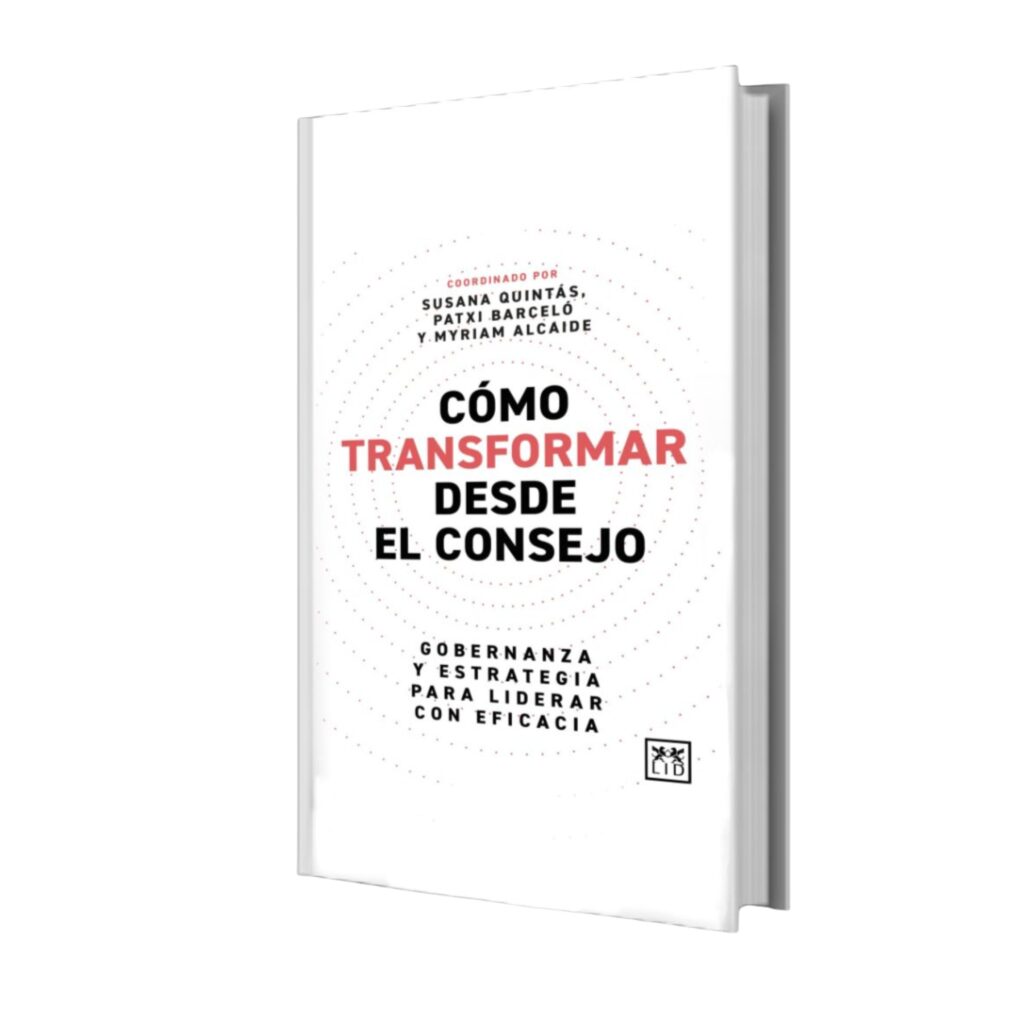
Cómo transformar desde el Consejo
Written for owners and directors of unlisted mid-market and family companies. Her chapter, “A corporate GPS: mapping effective governance,” sets out how to build a governance model that fits the company in front of you rather than the one in the textbook.

Cómo innovar desde el Consejo
Written against a stark finding: only 20% of Spanish boards treat innovation as a priority. Her chapter makes the case for driving innovation through the intelligent use of technology, so that sustainability delivers a positive impact on the profit and loss account.

Piensa como un consejero
Ten themes every board needs on its agenda. Her chapter, “The good, the ugly and the bad of digital transformation,” reads the post-pandemic economy, technological acceleration and a multipolar world as one strategic problem landing on boards at once.
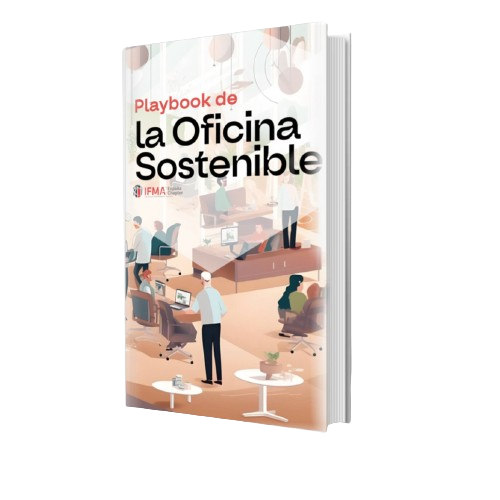
Playbook de la Oficina Sostenible
Europe's first white paper on office sustainability, with fifteen contributing experts from Accenture, CBRE, JLL, KPMG and Aon. The origin of the line she has repeated ever since: if an office is not profitable, it cannot be sustainable.
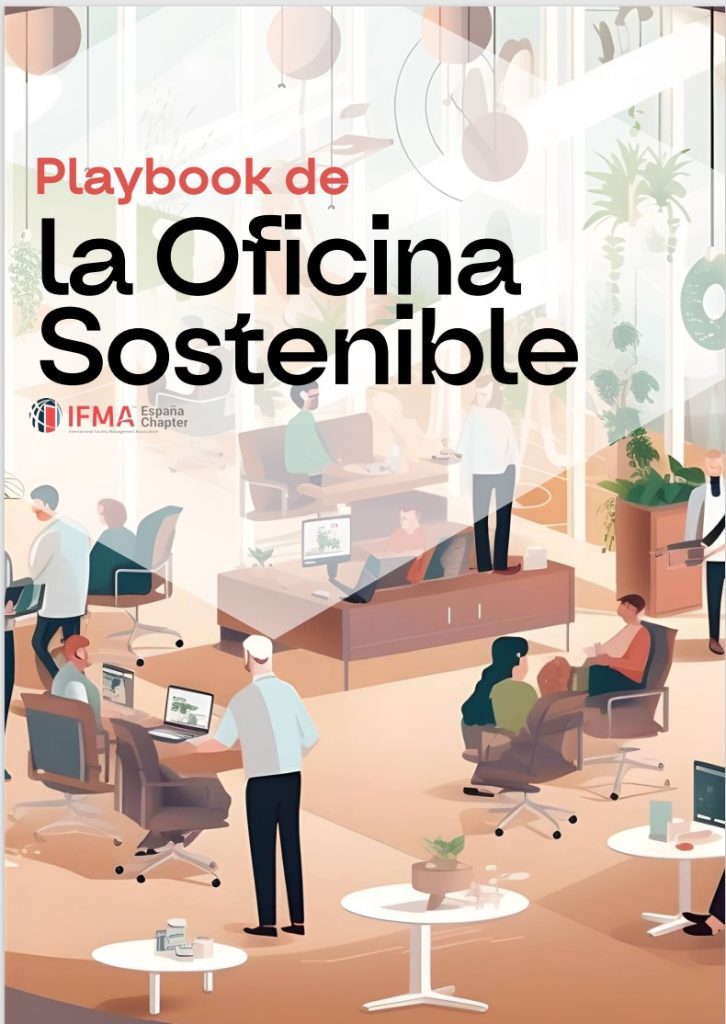
Playbook de la Oficina Sostenible
A second edition, expanded after the first became a reference across the European property and workplace sector, and covered by Expansión and Cinco Días. Free to download, which is how it reached the audience it was written for.
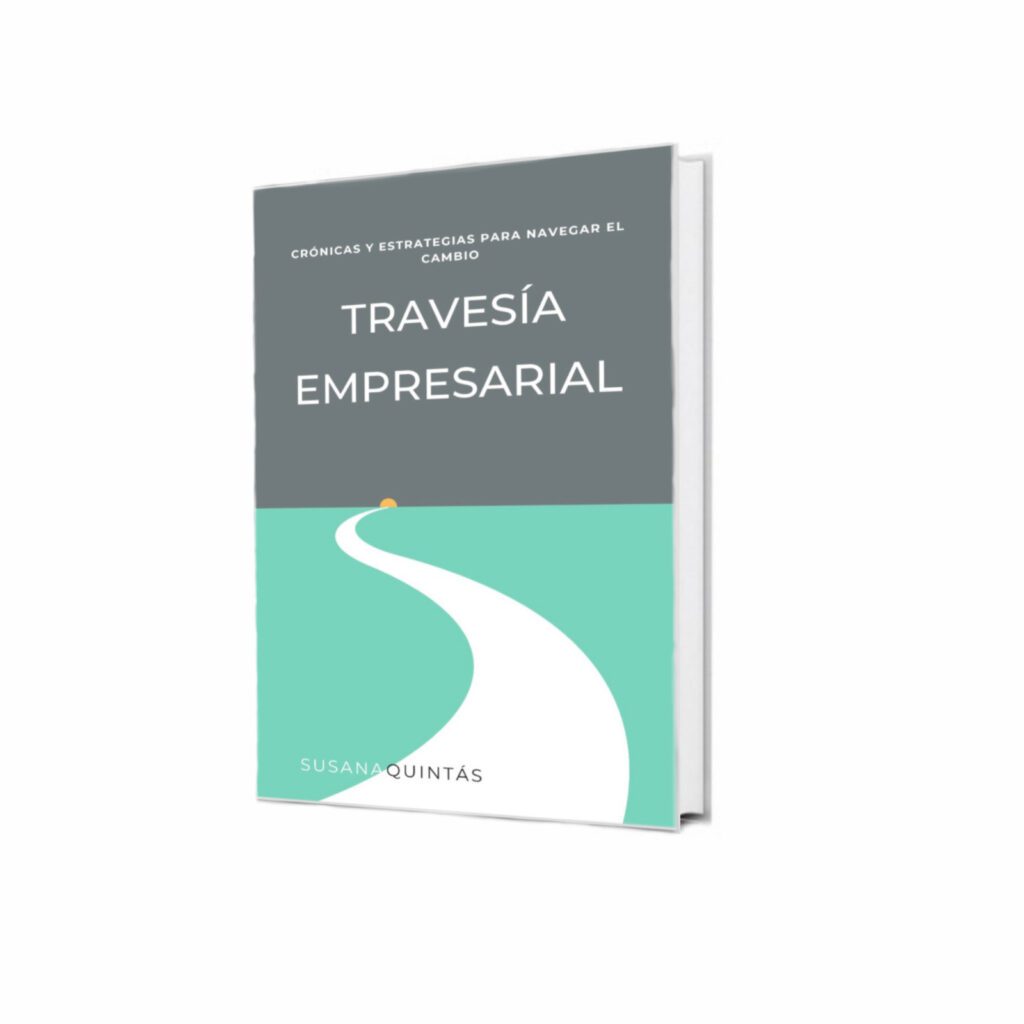
Travesía empresarial
Her own book, drawn from three years of columns on corporate purpose, digital transformation, culture and governance. Less a manual than a record of how her thinking moved as the ground shifted underneath it.
More than a hundred
columns published
She writes a regular column for La Voz de Galicia, the leading daily newspaper in northwest Spain, and contributes to Expansión and Cinco Días, the country's two main business dailies, as well as to El Economista, the management journal Capital Humano and the sustainability publication Diario Responsable.
Former Associate Professor in ESG and real estate at IE Business School in Madrid, ranked number one in the world in the Financial Times Online MBA Ranking 2026, its fourth consecutive year in first place. She is also a mentor to senior professionals at Esade, ranked third in Europe in the Financial Times European Business School Ranking, and in PwC's Women to Watch programme.
Ambassador for the boards vertical at 50más50, the Spanish platform for senior female leadership, and a regular speaker on corporate governance, board-led transformation, artificial intelligence, cyber risk and operational resilience, in Spain and internationally.
Boards and Beyond
Her governance podcast, recorded in English and Spanish, now past its fortieth episode. Short conversations for people who sit on boards and have to decide on subjects nobody in the room fully understands yet.
Listen on Spotify →- Episode 40Governing agentic AI in the boardroom
- Episode 39Why cyber defenses fall like Constantinople